
Table of Contents
Do I Need a Panel Upgrade Before Installing an EV Charger?
The honest answer is: not always.
Some homes already have enough available panel capacity for a dedicated EV charger circuit. Other homes may need a panel upgrade, sub-panel, dedicated circuit, or load management system before the charger can be installed safely.
The correct answer depends on your panel size, available electrical capacity, existing household loads, breaker space, charger amperage, wiring route, and whether load management is suitable for your home.
Leduc Electrical Contracting helps homeowners in Leduc, Beaumont, Devon, Nisku, South Edmonton, Sherwood Park, Leduc County, and nearby areas plan safe, code-ready EV charger installations.
Not sure if your panel can support a Level 2 EV charger? Call Leduc Electrical Contracting at +1 587-801-1440 to schedule an EV charger and panel capacity review.
Key Takeaways: EV Charger Panel Upgrades
You do not always need a panel upgrade before installing an EV charger.
Many homes with a healthy 200-amp electrical panel can support a Level 2 EV charger after a proper load calculation.
Homes with 100-amp service need a closer review because available capacity depends on the home’s existing electrical loads.
Homes with 60-amp service, older panels, full panels, or frequent breaker issues are more likely to need electrical upgrades.
A full panel upgrade is not the only option. In some homes, load management, a properly sized charger, or another approved energy-management solution may help avoid a larger upgrade.
The safest next step is to have a qualified electrician complete a panel review and load calculation before buying or installing the charger.
For homeowners in Leduc and nearby areas, EV charger installation in Leduc should start with a proper panel capacity review. If your existing panel cannot safely support the charger, a residential panel upgrade may be recommended.
Quick Answer: Do You Need a Panel Upgrade Before Installing an EV Charger?
No, you do not always need a panel upgrade before installing an EV charger.
Many modern homes with a healthy 200-amp electrical panel can support a Level 2 EV charger after a proper load calculation. Homes with 100-amp service need a closer review, and homes with 60-amp service are more likely to need electrical upgrades before Level 2 charging can be added safely.
A panel upgrade may be needed if the panel is full, outdated, damaged, frequently tripping, or already near capacity. In some cases, load management can help avoid a full service upgrade by reducing or pausing EV charging when the home is using more power.
The real answer depends on available electrical capacity, not panel size alone. A qualified electrician should review your panel, existing household loads, charger amperage, breaker space, wiring route, grounding, bonding, and permit requirements before approving the installation.If your panel has warning signs such as tripping breakers, flickering lights, damaged equipment, or limited breaker space, schedule electrical troubleshooting and repairs before adding a major EV charging load.
When a Panel Upgrade Is Usually Needed for an EV Charger
| Situation | Panel Upgrade Needed? | Why It Matters |
| 200-amp panel with available capacity | Often no | Many 200-amp panels can support a Level 2 charger after a load calculation. |
| 100-amp panel | Maybe | Some 100-amp panels can work, but the home’s existing electrical load must be reviewed. |
| 60-amp service | More likely | Smaller or older service is less likely to support Level 2 charging safely. |
| Full electrical panel | Maybe | The home may need a panel upgrade, sub-panel, or approved load management solution. |
| Frequent breaker trips | Maybe | Existing circuit or panel issues should be corrected before adding EV charging. |
| Major existing loads | Maybe | Hot tubs, electric ranges, air conditioning, dryers, garage heaters, and suites can reduce available capacity. |
| Load management is suitable | Sometimes avoidable | Load management may allow charging without a full panel or service upgrade. |
For most homes, the important question is not only:
“Do I have space for another breaker?”
The better question is:
“How much available electrical capacity does my home actually have after existing loads are counted?”That is why a panel review and load calculation should happen before finalizing the EV charger installation.
Why an EV Charger Adds a Major Electrical Load
A Level 2 EV charger is not like plugging in a lamp, phone charger, or small appliance. It can draw a significant amount of power for several hours.
That matters because your electrical panel must support the charger while the rest of your home continues using power.
Your home may already be running:
- Electric range
- Dryer
- Furnace equipment
- Air conditioning
- Basement circuits
- Garage tools
- Kitchen appliances
- Lighting
- Hot tub
- Garage heater
- Future renovation circuits
This is why a proper load calculation matters before installation.
Natural Resources Canada explains that some EV chargers can use a standard outlet, while others need a 240V outlet installed by a certified electrician. That means higher-level home EV charging should be planned around the home’s electrical system, not treated like a regular plug-in appliance.
What an Electrician Checks Before Installing an EV Charger
Before installing a home EV charger, an electrician should not only ask:
“Is there space in the panel?”
That is too basic.
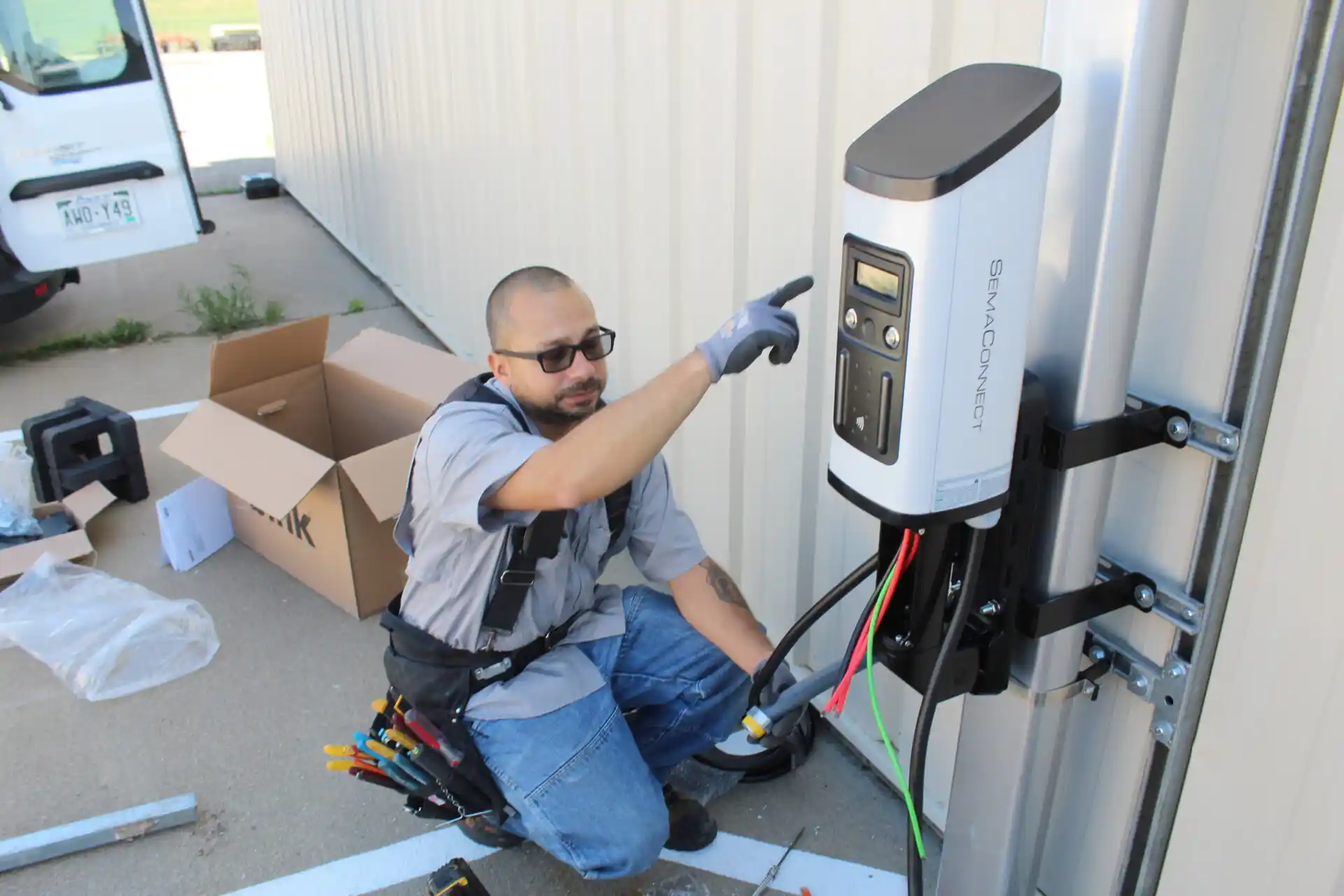
A proper EV charger assessment should check:
- Main electrical service size
- Panel condition
- Available breaker space
- Existing household load
- Charger amperage
- Distance from the panel to the charger location
- Garage or outdoor installation conditions
- Wire route
- Grounding and bonding
- Permit requirements
- Whether load management is needed
- Whether future electrical upgrades are planned
This helps protect your home, your EV, and your electrical system.
If the review shows panel, breaker, wiring, or circuit issues, Leduc Electrical Contracting can also help with electrical troubleshooting and repairs before the charger is installed.
Panel Space vs Panel Capacity: Why Both Matter
Many homeowners look inside the electrical panel and think:
“There is space for another breaker, so I should be fine.”
That is not always true.
Panel space and panel capacity are different.
Panel space means there is physical room for another breaker.
Panel capacity means your electrical system can safely handle the added load.
An EV charger may need all of the following:
- Physical breaker space
- Enough available electrical capacity
- A properly sized dedicated circuit
- Correct wiring and protection
- Code-ready installation
- Safe grounding and bonding
- Permit-ready documentation when required
A panel can have open breaker space but still lack enough capacity for a Level 2 charger.
The opposite can also happen. Your home may have enough capacity, but the panel may need a safe way to add the required circuit.
That is why an in-person panel review matters before approving the final installation plan.
100-Amp vs 200-Amp Panels: What Homeowners Should Know
Many homeowners think:
“If I have a 100-amp panel, I automatically need a 200-amp upgrade.”
That is not always true.
A 100-amp panel may still work for an EV charger if the home has enough available capacity and the charger is sized correctly.
In other homes, the same 100-amp panel may not have enough spare capacity.
A 200-amp panel usually gives more flexibility. However, even a 200-amp panel should still be reviewed before charger installation. A large home with several major electrical loads may still need careful planning.
The better question is not only:
“Is my panel 100 amps or 200 amps?”
The better question is:
“How much available capacity does my home actually have after existing household loads are considered?”
60-Amp, 100-Amp, and 200-Amp Panels: What Usually Happens
Your panel size does not give the full answer, but it does give a useful starting point.
| Panel Size or Condition | What It Usually Means for EV Charging |
| 60-amp service | More likely to need an upgrade before Level 2 EV charging |
| 100-amp service | May work, but needs a proper load calculation |
| 200-amp service | Often has enough capacity, but still needs review |
| Full panel with no spaces | May need a panel upgrade, sub-panel, or approved load management solution |
| Older or damaged panel | Should be reviewed before adding a charger |
A 200-amp panel is usually more EV-ready than a 100-amp panel. But panel size alone is not enough.
A 100-amp panel may still support a charger if the home has available capacity and the charger is sized correctly. A 200-amp panel may still need planning if the home already has several major electrical loads.
This is why Leduc Electrical Contracting checks both panel size and real household demand before recommending an EV charger setup.
Signs You May Need a Panel Upgrade Before Installing an EV Charger
You may need a residential panel upgrade before installing an EV charger if your home shows any of the signs below.
Your Breakers Trip Often
A breaker that trips once does not always mean your panel is overloaded.
Repeated breaker trips are different. They can point to an overloaded circuit, faulty breaker, wiring issue, or another electrical problem.
If breakers trip when you run appliances, tools, heating equipment, or cooling equipment, adding an EV charger could make the problem worse.
If this is already happening, schedule electrical troubleshooting and repairs before adding a new EV charging load.
Your Electrical Panel Is Full
A Level 2 EV charger usually needs a dedicated circuit.
If your panel has no room for another circuit, your electrician needs to check the safest option. Sometimes that means a panel upgrade. In other homes, a sub-panel or load management solution may be considered.
A full panel does not automatically mean a full service upgrade is required, but it does mean the installation needs a proper electrical review.
Your Home Has Older Electrical Equipment
Older electrical panels were not always designed for today’s power demands.
If your home already needs electrical updates, EV charger installation is a good time to review the panel, breakers, grounding, bonding, and overall capacity.
Older equipment should not be pushed harder without checking whether it can safely support the added charging load.
You Plan Future Electrical Upgrades
Your EV charger may not be the only future load.
You may also plan to add:
- Air conditioning
- Basement development
- Hot tub
- Garage heater
- Workshop equipment
- Second EV charger
- Electric range
- Larger renovation circuits
If more electrical upgrades are coming, a panel upgrade may be the smarter long-term choice.
Your Lights Flicker or Dim
Lights that flicker or dim when large appliances turn on can point to a load issue, loose connection, voltage drop, or another electrical problem.
Do not ignore this before adding an EV charger.
A Level 2 EV charger adds another major load. Existing warning signs should be checked before installation.
Can Load Management Help Avoid a Panel Upgrade?
Yes, sometimes.
Load management can help some homeowners avoid a full panel upgrade or service upgrade.
A load management system monitors how much power your home is using. If your home is using a lot of power, the system can reduce or pause EV charging. When more capacity is available, charging can continue.
This can be useful when your panel has limited spare capacity but your home can still support EV charging with the right controls.
Load management is not a shortcut around safety. It still needs proper design and installation by a qualified electrical contractor.
For some homes, load management is a practical way to add EV charging without oversizing the project. For other homes, a panel upgrade is still the safer option.
How to Avoid a Full Panel Upgrade for an EV Charger
A full panel upgrade is not always required. Depending on your home, your electrician may review safer alternatives before recommending a larger upgrade.
Use Load Management
Load management can reduce or pause EV charging when the home is already using a lot of power. When more capacity becomes available, charging can continue.
This may help some homes add EV charging without a full panel or service upgrade.
Load management must still be designed and installed correctly. It is not a shortcut around electrical safety.
Choose a Lower-Amp Level 2 Charger
Not every homeowner needs the fastest charger available.
A lower-output Level 2 charger may still recharge your EV overnight while placing less demand on the electrical panel. This can be useful if your home has limited available capacity.
The charger size should match your vehicle, driving habits, panel capacity, and future electrical plans.
Review Approved Energy Management Options
In some cases, an approved energy management solution may help manage electrical demand. This type of option must be reviewed by a qualified electrician to confirm whether it is suitable and allowed for your installation.
Do not assume a device is safe or code-ready just because it is sold online. EV charger equipment should be matched to your panel, wiring, charger, and local permit requirements.
Add a Sub-Panel Where Appropriate
A sub-panel may help organize circuits or create a cleaner installation path in some homes. However, a sub-panel does not create more electrical service capacity by itself.
Your electrician still needs to confirm whether the main service can support the added EV charging load.
Plan the Charger Location Carefully
The distance between the electrical panel and charger location can affect installation complexity and cost.
A practical charger location may reduce wiring distance, avoid unnecessary routing problems, and make the installation cleaner. This should be reviewed before buying the charger.
Ways to Add an EV Charger Without a Full Panel Upgrade
A full panel upgrade is not the only possible path.
Depending on your home, your electrician may review options such as:
- Installing a properly sized Level 2 charger
- Reducing charger output to match available capacity
- Using load management
- Adding a sub-panel where appropriate
- Choosing a charger location that reduces wiring complexity
- Planning the charger around your home’s real electrical demand
- Reviewing future electrical upgrades before choosing the final setup
Load management can be useful when your home has limited spare capacity but does not need a full service upgrade. It can reduce or pause charging when the home is using more power, then allow charging to continue when capacity is available.
This can help some homeowners avoid unnecessary upgrade costs.
However, these options must be reviewed by a qualified electrician. The goal is not to force the cheapest solution. The goal is to choose the safest solution that fits your home, charger, panel, and future electrical plans.
Panel Upgrade vs Load Management: Which Option Is Better?
There is no single answer for every home.
A panel upgrade may be better if:
- Your panel is outdated
- Your panel is already crowded
- Your breakers trip often
- You want faster charging
- You plan future electrical upgrades
- A load calculation shows your current service is not enough
Load management may be better if:
- Your panel is in good condition
- Your main issue is limited available capacity
- You mostly charge overnight
- You want to avoid a larger service upgrade
- Your charger can work safely with controlled output
- Your electrician confirms that load management is suitable
The right answer depends on your panel, your home, your charger, your driving habits, and your future plans.
For many homeowners, the safest path is to start with an EV charger installation assessment before buying the charger or approving the final setup.
Do EV Charger Installations Need a Permit in Alberta?
In many cases, yes.
If the installation adds wiring, adds a circuit, changes service equipment, or upgrades the panel, a permit is usually required.
Alberta’s electrical codes and standards page lists CSA C22.1-24 Canadian Electrical Code, 26th Edition, as declared in force on April 1, 2025. That makes code-ready installation important for EV charger work, especially when new circuits, panel work, or service changes are involved.
For Leduc homeowners, documentation can also matter for rebate eligibility. The City of Leduc EV Charger Rebate Program states that eligible participants can apply for the lesser of $600 or 50% of the installed cost of a Level 2 charging station, and that installed costs can include electrical upgrades needed for a Level 2 EV charging station.
The City of Leduc participation guide also lists an Electrical Permit Final Inspection Report as supporting documentation after installation.
If permit handling, inspection records, and code-ready work matter to you, it helps to work with a certified electrical contractor before the project starts.
Why Permit and Inspection Documentation Matter
A permit is not just paperwork.
It helps confirm that the installation follows applicable electrical requirements. It can also help you keep records for:
- Safety
- Insurance
- Home resale
- Rebate applications
- Warranty records
- Charger documentation
- Proof of professional installation
- Future electrical work
Before work begins, ask who handles the permit and what documents you will receive after the installation.
For EV charger work, documentation can matter long after the charger is installed.
What Size EV Charger Should You Install?
Many homeowners want the fastest charger possible.
That makes sense, but bigger is not always better.
Your EV charger should match:
- Your vehicle
- Your daily driving habits
- Your panel capacity
- Your garage or parking setup
- Your budget
- Your future electrical plans
- Your available electrical load
For example, if you drive short distances most days, you may not need the highest-output charger. A lower-output Level 2 charger may still recharge your EV overnight.
The goal is not only fast charging.
The goal is safe, reliable home EV charging.
Should You Upgrade to 200 Amps for an EV Charger?
Maybe, but not automatically.
A 200-amp upgrade may make sense if:
- Your home has a 100-amp panel with limited available capacity
- You want higher charging speed
- Your panel is old or crowded
- You plan more electrical upgrades
- A load calculation shows the existing service is not enough
- You want more long-term flexibility for future electrical demand
But if your panel is healthy and load management is suitable, a full upgrade may not be required.
That is why a panel review matters. A proper answer requires looking at the real panel, not only the charger box.
If your panel does need more capacity, Leduc Electrical Contracting can review whether a residential panel upgrade is the right option.
How Much Can an EV Charger Panel Upgrade Cost?
The cost depends on your home.
A simple charger installation near the panel may cost much less than a project that needs a panel upgrade, longer wire route, trenching, service work, outdoor-rated equipment, or load management.
Main cost factors include:
- Existing panel size
- Available electrical capacity
- Distance from the panel to the charger location
- Indoor vs outdoor installation
- Charger amperage
- Permit and inspection requirements
- Need for load management
- Need for a panel upgrade or service upgrade
- Future electrical upgrades you want to plan for
This is why you should not approve a panel upgrade based only on a phone estimate.
Before spending money on a larger electrical upgrade, schedule an in-person panel review. A qualified electrician can confirm whether your home needs a full panel upgrade, load management, a dedicated circuit, or a simpler installation path.
What Leduc Homeowners Should Check Before Installing an EV Charger
For homeowners in Leduc, Beaumont, Devon, Nisku, South Edmonton, Sherwood Park, and Leduc County, the safest starting point is a panel and load review.
Before installation, Leduc Electrical Contracting checks:
- Existing electrical service size
- Panel condition
- Available breaker space
- Major household electrical loads
- Charger amperage
- Garage or outdoor charger location
- Wiring route
- Grounding and bonding
- Permit requirements
- Whether load management may help
- Whether a residential panel upgrade is actually needed
This matters because two homes with the same panel size can have different available capacity.
One 100-amp home may be able to support a properly sized charger with the right setup. Another 100-amp home may already be near capacity because of electric heating, an electric range, air conditioning, a hot tub, garage equipment, or other major loads.
The right answer comes from the actual home, not only the number printed on the main breaker.
When to Call an Electrician Before Buying an EV Charger
Call an electrician before buying the charger if:
- You are not sure whether your panel is 100 amps or 200 amps
- Your panel is full
- Your breakers already trip
- Your lights flicker or dim
- You want a faster Level 2 charger
- You park far from the electrical panel
- You need outdoor charging
- You plan to apply for a rebate
- You want permit and inspection documents handled properly
- You may add more electrical loads in the future
This step can save time and money.
It can also prevent you from buying a charger that does not fit your home’s electrical capacity or installation needs.
What Happens During an EV Charger Assessment?
When Leduc Electrical Contracting reviews a home for EV charger installation, the goal is to find the safest and most practical path.
A review may include:
- Looking at your electrical panel
- Checking available breaker space
- Reviewing panel capacity
- Discussing your EV model and charger type
- Checking the charger location
- Reviewing the wire route
- Considering permit requirements
- Explaining whether a panel upgrade or load management makes sense
- Reviewing future electrical needs
You should leave the review with a clear answer, not a guess.
A proper assessment should help answer:
- Can your home support a Level 2 charger?
- Does your panel need an upgrade?
- Is load management a safe option?
- What charger size makes sense?
- What permit or inspection documentation may be needed?
- What is the safest installation path?
Common Mistakes Homeowners Should Avoid
Buying the Charger Before Checking the Panel
Some chargers may not be the right fit for your home’s electrical capacity.
It is better to review the panel first, then choose the charger.
Assuming Every EV Needs the Largest Charger
A properly sized charger can be safer, more practical, and more cost-effective.
The largest charger is not always the best charger for your home.
Ignoring Permit Requirements
Skipping permits can create problems later, especially for insurance, resale, rebates, or future electrical work.
Before installation starts, ask whether a permit is required and who will handle it.
Treating EV Charging Like a Regular Outlet
A Level 2 charger is a major electrical load.
It needs proper planning, proper wiring, and the right protection.
Choosing the Cheapest Quote Without Asking What Is Included
A complete quote should explain:
- Charger circuit
- Wire route
- Permit handling
- Panel capacity
- Load management, if needed
- Whether a panel upgrade is required
- Inspection documentation
- Indoor or outdoor installation requirements
The cheapest quote is not always the safest or most complete option.
Questions to Ask Before Installing an EV Charger
Before approving the work, ask:
- Does my panel have enough capacity?
- Do I need a panel upgrade for an EV charger?
- Can load management help?
- Will the charger need a dedicated circuit?
- Is a permit required?
- Who handles the permit?
- Will I receive inspection documentation?
- Is my charger location practical?
- What charger size makes sense for my home?
- Will this setup support future electrical upgrades?
These questions help you avoid surprise costs and unsafe shortcuts.
They also help your electrician recommend the right installation path instead of guessing.
EV Charger Installation in Leduc and Nearby Areas
Leduc Electrical Contracting provides EV charger installation in Leduc and panel upgrade support for homeowners in:
- Leduc
- Beaumont
- Devon
- Nisku
- South Edmonton
- Sherwood Park
- Leduc County
Whether you are installing your first EV charger or planning a future electrical upgrade, the safest starting point is a panel and load review.
For local homeowners, the main goal is simple: choose an EV charger setup that is safe, practical, code-ready, and suitable for the home’s real electrical capacity.
Reviewed for Electrical Safety and Local Service Relevance
This guide was prepared for homeowners considering EV charger installation in Leduc and nearby Alberta communities.
EV charger installation, panel capacity, load management, and panel upgrade decisions should be confirmed by a qualified electrical contractor after reviewing the home’s electrical panel, existing loads, charger amperage, wiring path, and permit requirements.
If you are unsure whether your current panel can support EV charging, do not guess based on panel size alone. A proper assessment is the safest way to confirm your options.
Final Answer: Do You Need a Panel Upgrade Before Installing an EV Charger?
You may need a panel upgrade before installing an EV charger, but not always.
Some homes can support a Level 2 charger with the existing electrical panel. Some homes need load management. Others need a panel upgrade before the charger can be installed safely.
A 200-amp panel is often a good sign, but it is not the whole answer. A 100-amp panel may still work in some homes. A 60-amp panel is more likely to need electrical upgrades. The real answer depends on panel condition, available capacity, charger size, household demand, breaker space, permit requirements, and future electrical plans.
Before paying for a panel upgrade, ask for a proper panel review and load calculation. That review can confirm whether your home needs a full panel upgrade, load management, a dedicated EV circuit, a sub-panel, or a simpler installation path.
If you are planning a home EV charger installation in Leduc or nearby areas, Leduc Electrical Contracting can inspect your panel, explain your options, and help you choose a safe, code-ready solution.
For service help, visit EV charger installation in Leduc orcontact Leduc Electrical Contracting online.
FAQs
No. Some homes with 100-amp service can support EV charging if a proper load calculation shows enough available capacity or if load management is suitable. Other homes may need a 200-amp upgrade.
Yes, sometimes. If your panel has enough capacity and room for the required circuit, a panel upgrade may not be needed. An electrician should confirm this before installation.
Not always. Many homes can support EV charging without a full panel upgrade, especially if the panel has enough available capacity. Homes with 100-amp or 60-amp service need a closer review before installation.
You need a panel review, load calculation, charger location plan, dedicated circuit review, permit check, and a clear installation quote. A qualified electrician should confirm whether your home needs a panel upgrade, load management, or only a standard charger circuit.
Load management controls how much power the EV charger uses based on your home’s available electrical capacity. It can reduce or pause charging when the home is using more power.
Sometimes. Load management may help avoid a full panel upgrade when the existing panel is in good condition but has limited available capacity. It must be designed and installed correctly by a qualified electrician.
If the installation adds or changes electrical wiring, circuits, or service equipment, a permit is usually required. Local permit processes can vary, so homeowners should confirm before work starts.
Yes. If the panel has no safe room for a new dedicated circuit, your electrician may recommend a panel upgrade, sub-panel, load management system, or another code-compliant option.
Often, yes. If you plan to add a hot tub, basement development, air conditioning, second EV charger, or other high-demand equipment, a panel upgrade may be the better long-term choice.
It is better to call an electrician first. A panel review can help confirm the right charger size, installation route, permit needs, and whether your home needs a panel upgrade or load management.
Many EV owners use the 80/20 rule as a battery-health habit: charge to around 80% for regular daily driving and avoid frequently dropping near 20% when possible. This is different from the electrical panel decision. Your panel still needs to be reviewed based on charger load, household demand, and available capacity.
Schedule an EV Charger Panel Review in Leduc
Not sure whether your home needs a panel upgrade for an EV charger?
Leduc Electrical Contracting can inspect your panel, review your electrical capacity, explain your charger options, and help you choose a safe installation plan.
Call Leduc Electrical Contracting at Your Lights Flicker or Dim
to book an EV charger and panel capacity review.
You can also contact Leduc Electrical Contracting online to request service.